


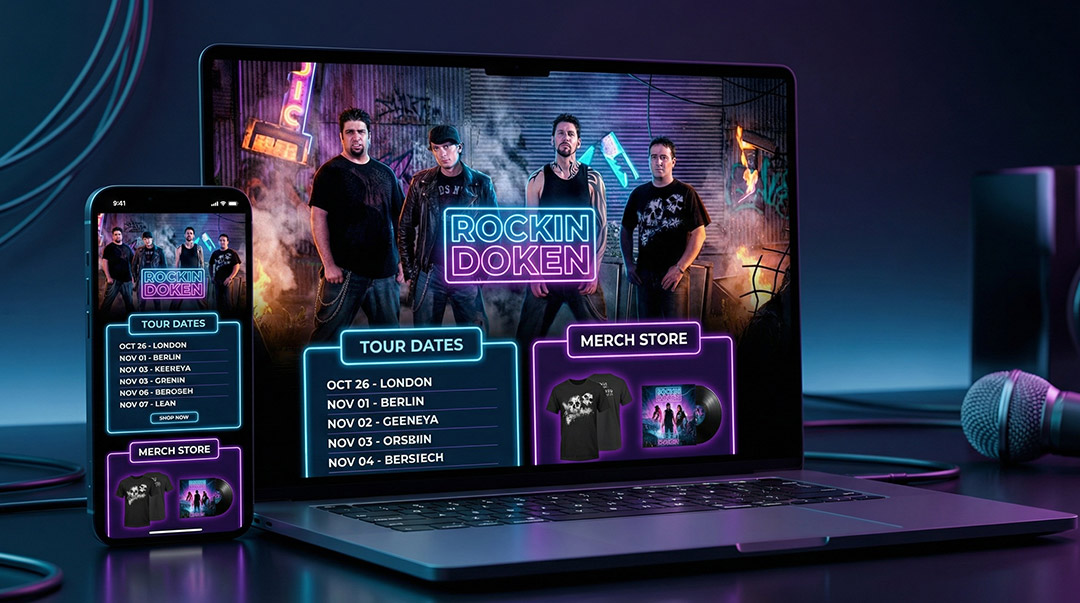
Web Design Trends for Musicians and Bands
A musician’s website is no longer just a digital business card—it’s the core of their brand, their storefront, and their direct connection to fans. In 2026, artist websites have evolved into immersive experiences that combine storytelling, functionality, and performance-driven design. Whether you’re an indie artist, a touring band, or an established act, your website is your digital headquarters—and it needs to work hard.
Modern musician website design focuses on three core pillars: user experience (UX), mobile-first performance, and seamless integration with platforms where fans already engage. Today’s fans expect more than static pages; they want interaction, emotion, and instant access to music, merch, and tour updates.
Let’s break down the top web design trends shaping musician and band websites in 2026—and how you can use them to elevate your online presence.
Dark Mode and Immersive Visual Design
Dark mode has become the dominant aesthetic in musician website design—and for good reason. It creates a cinematic atmosphere that enhances visuals, reduces eye strain, and makes colors pop. For musicians, especially in genres like rock, hip-hop, EDM, and metal, dark-themed sites feel more aligned with their brand identity.
But it’s not just about switching the background to black. Immersive design goes deeper:
- High-contrast typography that commands attention
- Neon accents or subtle gradients for mood
- Layered visuals that create depth
- Motion effects that respond to user interaction
This approach turns a website into an experience rather than a destination. When a fan lands on your homepage, they should feel like they’ve entered your world—not just opened a webpage.
Fullscreen Video Backgrounds
Video is king in 2026, and musicians are leveraging fullscreen video backgrounds to instantly capture attention. Instead of static hero images, artists are using looping video clips that showcase performances, behind-the-scenes moments, or cinematic storytelling.
This trend works because it:
- Immediately communicates your vibe and sound
- Keeps users engaged longer
- Builds emotional connection within seconds
However, there’s a balance to strike. Videos must be optimized for performance. Slow-loading backgrounds can hurt both user experience and SEO rankings. Smart implementation includes:
- Compressed video files
- Lazy loading techniques
- Mobile-specific fallbacks
Done right, a video background can turn a casual visitor into a fan within moments.
Mobile-First Design is No Longer Optional
More than 70% of music fans access artist websites through their phones. That means mobile-first design isn’t just important—it’s mandatory.
A modern band website UX must prioritize:
- Fast load times on mobile networks
- Thumb-friendly navigation
- Simplified layouts
- Click-to-play media and easy streaming access
If your site feels clunky on a phone, users will leave within seconds. Search engines also prioritize mobile-friendly websites, meaning poor mobile optimization directly impacts your visibility.
Designing for mobile first—and then scaling up to desktop—is now the standard approach.
Interactive Tour Date Sections
Touring remains one of the most important revenue streams for musicians, and websites are evolving to support that. Static lists of tour dates are being replaced with interactive, user-friendly modules.
Modern tour sections now include:
- Location-based filtering (showing nearby events)
- Integrated ticket purchasing
- Calendar syncing options
- Real-time updates
These features make it easier for fans to take action immediately. Instead of searching multiple platforms, they can find everything they need in one place.
The goal is simple: reduce friction between discovery and purchase.
Integrated Merch Stores
Merchandise is a major part of an artist’s brand and income. In 2026, integrated merch stores are becoming standard on musician websites.
Instead of linking out to third-party platforms, artists are embedding fully functional stores directly into their sites. This creates a seamless experience where fans can:
- Browse products without leaving the site
- Purchase instantly
- Discover exclusive or limited-edition items
Design-wise, merch sections are becoming more lifestyle-focused. Instead of basic product grids, artists are showcasing merch through:
- Styled photo shoots
- Lookbooks
- Video previews
This approach elevates merch from simple products to extensions of the artist’s identity.
Seamless Streaming Integration
Fans expect instant access to music. That’s why modern music portfolio websites integrate streaming platforms directly into the design.
Instead of redirecting users, sites now feature:
- Embedded players
- Smart links to preferred platforms
- Auto-updating discographies
This keeps fans engaged within your ecosystem while still supporting streaming numbers.
The easier it is for someone to hear your music, the more likely they are to stick around—and come back.
Story-Driven Landing Pages
One of the biggest shifts in artist branding online is the move toward storytelling. Instead of generic homepages, musicians are creating narrative-driven landing experiences.
These pages guide visitors through a journey:
- Visual introduction (video or hero image)
- Emotional hook (tagline or message)
- Music or latest release
- Tour or merch call-to-action
This structure mirrors how fans connect with artists—through emotion first, then action.
Story-driven design works because it builds a connection before asking for anything in return.
Speed and Performance Optimization
Design means nothing if your site doesn’t load quickly. Speed is now a critical ranking factor for search engines, and slow websites are penalized heavily.
For musicians, performance optimization includes:
- Image compression
- Minimal use of heavy scripts
- Efficient hosting solutions
- Clean, lightweight code
A fast site doesn’t just improve SEO—it improves user experience. Fans are more likely to stay, explore, and engage when everything loads instantly.
Minimalist Navigation and Clean UX
Cluttered websites are a thing of the past. Modern band website UX focuses on simplicity and clarity.
Key principles include:
- Minimal menu options
- Clear calls-to-action
- Logical page structure
- Consistent design language
Visitors should never feel lost. Within seconds, they should know:
- Who you are
- What you do
- Where to listen
- How to support you
Clean UX design ensures that every interaction feels intuitive.
Personal Branding Through Custom Design
Templates can only take you so far. In 2026, artists are investing more in custom website designs that reflect their unique identity.
This includes:
- Custom typography
- Unique layouts
- Branded color palettes
- Interactive elements tailored to the artist
Your website should feel like an extension of your music. When someone visits, they should immediately understand your aesthetic, tone, and personality.
Strong branding builds recognition—and recognition builds loyalty.
Social Media and Fan Engagement Integration
Websites are no longer isolated platforms. They’re hubs that connect all aspects of an artist’s digital presence.
Modern musician websites integrate:
- Social media feeds
- Email sign-ups
- Fan club memberships
- Exclusive content access
This creates a centralized ecosystem where fans can engage on multiple levels.
Email lists, in particular, are becoming more valuable as artists look for ways to connect directly with fans without relying solely on algorithms.
Accessibility and Inclusive Design
Accessibility is becoming a key consideration in web design. Musicians are ensuring their websites are usable for everyone, including fans with disabilities.
This includes:
- Readable fonts and contrast
- Keyboard navigation support
- Alt text for images
- Captioned video content
Inclusive design not only expands your audience—it also reflects professionalism and awareness.
Final Thoughts
The landscape of musician website design in 2026 is all about experience, performance, and connection. Fans expect more than just information—they want immersion, convenience, and authenticity.
By embracing trends like dark mode, video integration, mobile-first design, and story-driven layouts, musicians can create websites that don’t just look good—but actually convert visitors into loyal fans.
Your website is one of the few platforms you fully control. Unlike social media, where algorithms dictate visibility, your site is your space to tell your story, sell your products, and build your brand on your own terms.
Investing in a modern, high-performing website isn’t just a design choice—it’s a strategic move that can define your success in today’s music industry.
Recent Comments