Best Drawing Tools for Comic Book Artists (Beginner to Pro Guide)
The Tools Behind Every Great Comic
Every great comic starts with an idea—but it’s the tools that bring that idea to life.
Whether you’re sketching your first character or producing a full-length graphic novel, the tools you use will directly impact your workflow, efficiency, and final quality. In 2026, comic artists have more options than ever, from traditional pencils and ink to powerful digital tablets and software.
The truth is, there’s no single “perfect” setup. The best tools depend on your style, your goals, and how you like to work. But there are industry standards—tools that professionals rely on because they consistently deliver results.
This guide breaks down the best drawing tools for comic book artists, from beginner essentials to pro-level gear, so you can build a setup that actually works.
Starting with the Basics: Pencils and Sketching Tools
Every comic begins with a sketch.
Even in a digital world, understanding traditional sketching tools is critical. Pencils give you control, flexibility, and the ability to experiment before committing to ink.
Recommended Pencil Types:
- HB pencils – Great for general sketching
- 2B–4B pencils – Softer lead for darker lines and expressive work
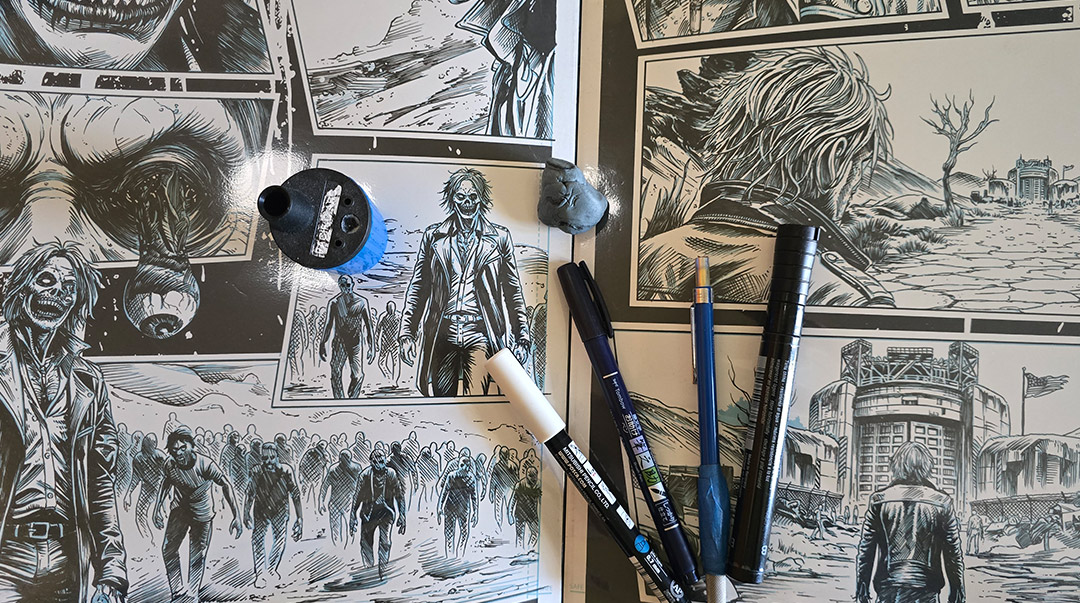
- Mechanical pencils – Ideal for clean, consistent line work
Many professional comic artists prefer mechanical pencils for their precision, especially when working on detailed panels.
Pro Tip:
Start light. Your initial sketch should be loose and adjustable. Don’t press hard—you’ll refine it later.
Inking Tools: Where Your Art Comes to Life
Inking is where your comic truly takes shape. It defines your style, adds depth, and prepares your work for printing or digital coloring.
Top Inking Tools:
1. Brush Pens
Brush pens are a favorite among comic artists for their versatility. They allow you to create both thin and thick lines depending on pressure.
2. Dip Pens and Nibs
Traditional and highly expressive, dip pens offer unmatched line variation. However, they require practice and patience.
3. Technical Pens
These provide consistent line widths and are perfect for detailed work, backgrounds, and architectural elements.
4. Ink Brushes
Used for bold, dramatic strokes, especially in high-contrast comic styles.
Best Ink Types:
- Waterproof black ink (essential for scanning and coloring)
- Fade-resistant ink for long-term quality
Your inking tools define your visual identity. Experiment until you find what feels natural.
Paper Matters More Than You Think
Not all paper is created equal—especially when it comes to comics.
The right paper improves your line quality, prevents bleeding, and enhances the overall look of your work.
Best Paper Types for Comic Artists:
- Bristol Board (Smooth) – Ideal for detailed line work and clean inking
- Bristol Board (Vellum) – Slight texture, great for pencils and softer styles
- Marker Paper – Good for quick sketches and concept work
Most professional comic artists use 11×17 Bristol boards with pre-printed panel guides.
Pro Tip:
Cheap paper will hold you back. Invest in quality surfaces—it makes a difference immediately.
Erasers and Correction Tools
Mistakes are part of the process. The right eraser helps you fix them without damaging your work.
Must-Have Erasers:
- Kneaded eraser – Soft, flexible, great for lifting graphite
- Plastic eraser – Stronger, for clean removals
- Precision eraser pens – Perfect for small details
For ink corrections:
- White ink or correction fluid can fix small errors
- Scraping tools can remove ink (advanced technique)
Clean work is professional work.
Digital Drawing Tools: The Modern Standard
Digital art has become a dominant force in comic creation—and for good reason.
It offers:
- Faster workflows
- Easy corrections
- Layered editing
- Direct publishing options
Top Digital Drawing Hardware:
Drawing Tablets (No Screen):
- Affordable and reliable
- Great for beginners
Pen Displays (With Screen):
- Draw directly on the screen
- More natural feel
Tablet Devices:
- Portable and powerful
- Ideal for artists on the go
Many professionals now combine traditional sketching with digital inking and coloring.
Stylus and Pen Technology
Your stylus is your digital pencil—and it matters more than most beginners realize.
A high-quality stylus offers:
- Pressure sensitivity
- Tilt recognition
- Minimal lag
These features allow for more natural, expressive lines that mimic traditional tools.
Software: Where It All Comes Together
The right software can dramatically improve your workflow.
Top Comic Creation Software:
- Clip Studio Paint – Industry favorite for comics and manga
- Adobe Photoshop – Powerful and versatile
- Procreate – Intuitive and portable
- Adobe Illustrator – Great for lettering and design
Each tool has strengths, but Clip Studio Paint is widely considered the best all-in-one solution for comic artists.
Lettering Tools: The Overlooked Essential
Lettering can make or break your comic.
Bad lettering distracts readers—even if the art is great.
Options for Lettering:
- Hand lettering (traditional, stylized)
- Digital fonts (clean and professional)
Most modern creators use digital lettering for consistency and efficiency.
Building Your Ideal Setup (Beginner to Pro)
Beginner Setup:
- Mechanical pencil
- Basic sketchbook or Bristol paper
- Fineliner pens
- Entry-level drawing tablet
Intermediate Setup:
- Brush pens and dip pens
- High-quality Bristol board
- Digital software (Clip Studio Paint)
- Mid-range tablet
Professional Setup:
- Full inking kit (brushes, nibs, ink)
- Premium paper
- High-end pen display
- Advanced software workflow
Traditional vs Digital: Why Many Artists Use Both
The best comic artists don’t limit themselves—they combine tools.
A common workflow:
- Sketch traditionally
- Scan artwork
- Ink digitally
- Color and letter digitally
This hybrid approach offers the best of both worlds.
Investing in Your Craft
One of the biggest mistakes artists make is underinvesting in their tools.
You don’t need to buy everything at once—but you should upgrade as you grow.
Better tools:
- Improve efficiency
- Enhance quality
- Reduce frustration
Think of your tools as an investment in your career.
Final Thoughts: Tools Don’t Make the Artist—But They Help
At the end of the day, tools won’t replace skill.
But the right tools will:
- Make your process smoother
- Help you work faster
- Elevate your final product
The goal isn’t to have every tool—it’s to have the right ones for you.
Experiment. Upgrade. Refine your setup.
Because every great comic deserves the right tools behind it.
Recent Comments