by Richard Jones III | May 9, 2026 | event tickets, music industry
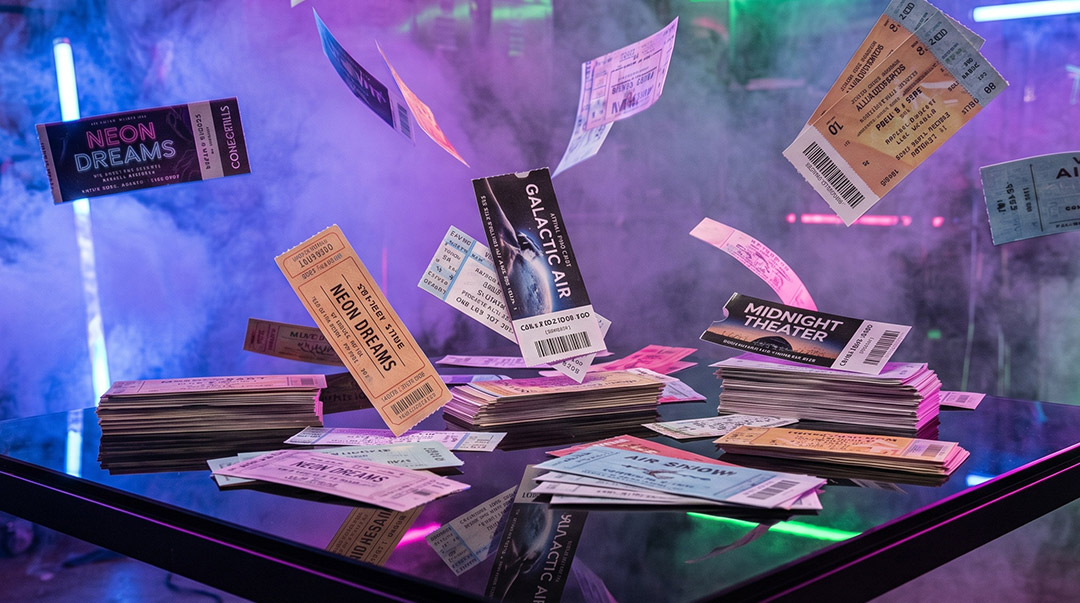
Of COURSE artists are canceling tours because of low ticket sales. What did the music industry expect? Y’all turned “going to a concert” into the financial equivalent of buying a used Honda Civic.
There was a time — not that long ago — when concerts were normal people activities. You’d hear your favorite band was coming to town and immediately text your friends:
“Tickets are 40 bucks. Wanna go?”
And then you’d go. That was it. No spreadsheets. No budgeting app notifications. No temporary emotional breakdown while staring at your checking account.
You’d scream lyrics with strangers, buy an overpriced hoodie you absolutely didn’t need, and end the night inhaling Taco Bell in a parking lot at midnight while your ears rang for three business days. It was beautiful.
Now?
Now buying concert tickets feels like trying to refinance a mortgage during a recession.
You click on a ticket listing that says $129 and think:
“Okay, painful, but manageable.”
Then checkout arrives like a WWE steel chair to the face.
Ticket Price: $129
Service Fee: $87
Convenience Fee: $42
Processing Fee: $18
Digital Delivery Fee: $11
Venue Fee: $23
Existence Fee: $9
Looking At The Seating Chart Fee: $6
“Dynamic Pricing” because apparently concerts now operate like airline tickets during a hurricane evacuation: $211
Suddenly your nosebleed seat behind a concrete support beam costs $497 and a portion of your soul.
And the wildest part? These companies genuinely seem confused about why ticket sales are slowing down.
Really?
You’re telling me people don’t want to spend half their rent to watch their favorite artist perform from Section Mount Everest while drinking a $28 hard cider poured into a reusable cup that says “Live Laugh Love Music”?
SHOCKING.
Concerts Used To Be For Everyone
The magic of concerts used to be accessibility.
You didn’t have to be rich. You didn’t have to finance the experience. You just liked music.
People could decide on a random Tuesday:
“Hey, let’s go see that band tonight.”
That sentence no longer exists in modern society unless the band is performing in somebody’s garage or behind a vape shop.
Today, attending a major concert requires:
A payment plan
Emotional resilience
Military-level queue strategy
Three devices open at once
Sacrificing your firstborn to the gods of Ticketmaster
Surviving the digital equivalent of The Hunger Games
“TICKETS ON SALE FRIDAY AT 10 AM!”
Nothing screams “fun entertainment experience” quite like sitting in a virtual waiting room with 84,000 people and 62,000 bots while your heart rate spikes into dangerous territory.
And after all that stress?
You finally get in only to discover:
“There are no tickets available.”
Oh wait — correction.
There ARE tickets available.
They’re just being resold immediately for $900 by a guy named Chad whose entire personality is ruining joy for others.
Dynamic Pricing Is Just Corporate Gaslighting
Let’s talk about “dynamic pricing,” which is corporate language for:
“We noticed people were excited, so we decided to financially assault them.”
The live music industry looked at airline companies — one of the most universally hated industries on Earth — and said:
“You know what? Let’s do THAT.”
Now ticket prices fluctuate based on demand, meaning the more fans want to see an artist, the more aggressively the system punishes them for caring.
That’s not innovation.
That’s emotional extortion.
But here’s the thing nobody talks about enough:
Dynamic pricing didn’t stop with concerts.
Oh no.
Corporations saw fans reluctantly paying surge prices and thought:
“Wait… what if we did this to literally EVERYTHING?”
Now dynamic pricing is infecting society like a financially transmitted disease.
Concerts.
Theater productions.
Movie theaters.
Sporting events.
Airshows.
Hotels.
Theme parks.
Airlines.
Even grocery stores are experimenting with digital shelf tags that can change prices instantly.
We are approximately six months away from Walmart charging extra because you looked too excited about frozen pizza.
Remember when prices used to just exist?
You walked into a store, saw a number, and that was the number. Ancient history apparently.
Now prices fluctuate based on:
demand
time of day
weather
local traffic
online engagement
moon phases probably
whether a CEO wants another vacation home
At this point I fully expect movie theaters to start charging:
“Opening Weekend Emotional Excitement Fees.”
Want to see a blockbuster Friday night?
That’ll be $39 because the algorithm detected joy in your browser history.
Broadway and live theater are getting ridiculous too.
Families wanting to see a stage production now have to financially prepare like they’re planning a destination wedding.
“Oh cool, orchestra seats are $180.”
Refreshes page.
“Oh never mind, now they’re $490 because somebody in Nebraska thought about buying them.”
And don’t even get me started on airshows and sporting events.
Families used to go to airshows because they were affordable community experiences.
Now you look at ticket prices and suddenly watching fighter jets from a Target parking lot feels financially responsible.
Sporting events aren’t much better.
You spend hundreds on tickets and then another $18 for a hotdog and a bottled water that tastes like sadness.
Meanwhile grocery stores testing digital shelf pricing should honestly terrify everyone.
Because once corporations normalize algorithm-based pricing for essentials, we’re cooked.
Imagine walking into the grocery store after work and seeing:
“Peak Dinner Hour Pricing Activated.”
Eggs are now premium.
Bread has entered luxury status.
Ground beef surged because the algorithm detected taco night energy.
You laugh now, but companies are already testing electronic shelf labels capable of changing prices throughout the day in real time.
Meaning someday soon your groceries could operate like Uber surge pricing during a thunderstorm.
And corporations LOVE this because algorithms remove human guilt entirely.
No manager has to look customers in the eye anymore.
The computer does the dirty work.
“Sorry ma’am, the AI determined your family looked hungry.”
Dynamic pricing is basically capitalism entering its supervillain arc.
It punishes people specifically for wanting something.
Excited about a concert?
Price goes up.
Need groceries after work?
Price goes up.
Trying to take your kids to the movies on opening weekend?
Price goes up.
Attempting to enjoy literally any public event without financial trauma?
The algorithm says absolutely not.
And companies wonder why everyone is angry all the time.
Entertainment used to be an escape from stress.
Now attending events CREATES stress.
The average person now needs:
budgeting apps
payment plans
browser extensions
discount codes
loyalty memberships
emotional support friends
and possibly a licensed accountant
…just to exist recreationally in modern society.
Ticket Fees Are Completely Unhinged
The fees deserve their own Netflix documentary.
At this point I’m convinced ticketing companies are just spinning a giant Wheel of Charges every morning.
“Ah yes, today we’re adding a Convenience Fee.”
What convenience exactly?
Because I’m sitting in my house doing all the work myself.
I found the event.
I selected the seats.
I typed my card information.
I verified I wasn’t a robot by identifying blurry crosswalks like I’m training artificial intelligence for free.
What part of this process was convenient for ME?
If anything, they should pay US.
And then there’s the processing fee.
What exactly is being processed?
My financial ruin?
There are so many mystery charges attached to modern tickets that by checkout you feel less like a music fan and more like you accidentally committed tax fraud.
The Parking Situation Is A Hate Crime
And let us not forget parking.
The concert industry looked at fans already bleeding money and said:
“You know what would make this experience even better? A $60 gravel lot located four miles away from the venue.”
You finally arrive after spending enough money to destabilize your monthly budget and then some guy in a neon vest waves you into a parking area that looks like an abandoned carnival site from a horror movie.
And if you’re lucky?
You only wait 97 minutes to leave afterward.
Luxury experience.
Fans Still Love Music — They’re Just Broke
This is the part corporations refuse to understand.
People still LOVE music.
Fans are not abandoning artists because they suddenly stopped caring.
They’re abandoning the prices.
The economy right now is being held together with duct tape, expired coupons, and caffeine addiction.
People are choosing between:
Rent
Groceries
Gas
Medical bills
Existing in society
And somewhere in the middle of all that, the music industry is asking:
“Would you like to spend $700 to sit behind a lighting rig?”
No.
No we would not.
The average person simply cannot justify spending hundreds — sometimes thousands — of dollars on a single night out anymore.
Especially when everything else is also expensive.
Dinner costs more.
Gas costs more.
Streaming subscriptions cost more.
Fast food costs more.
Somehow even water has become a luxury item.
At this point breathing near a major city probably comes with a subscription fee.
Artists End Up Taking The Blame
The saddest part is that artists often get blamed for poor ticket sales or canceled tours.
Suddenly headlines start acting like musicians are “falling off” because arenas aren’t selling out instantly.
Meanwhile fans are sitting at home like:
“I literally love this artist but I also enjoy surviving financially.”
This isn’t always an artist popularity issue.
It’s an affordability issue.
Fans shouldn’t have to take out a small business loan to hear live music.
And smaller artists are getting crushed even harder.
Massive pop stars might still fill stadiums because they have giant fanbases and millionaire audiences.
But mid-level touring artists?
Independent bands?
Alternative acts?
They’re stuck in a brutal system where venue costs, travel expenses, ticketing monopolies, inflation, and algorithmic pricing are all colliding at once.
So What Happens Next?
Something has to give eventually.
Fans are exhausted.
Artists are exhausted.
Even smaller venues are struggling.
The current system is unsustainable for normal people.
Live music should not become a luxury reserved only for influencers, crypto bros, and hedge fund managers named Preston.
Music is supposed to bring people together.
It’s supposed to be emotional.
Cathartic.
Fun.
Messy.
Loud.
Not a high-stakes financial decision requiring Excel spreadsheets and emotional support therapy afterward.
People want to go to concerts again.
They WANT to support artists.
They WANT to scream lyrics with strangers and lose their voices and buy dumb overpriced nachos at midnight.
But they also want to pay rent.
And until corporations stop treating every human emotion like a monetization opportunity, we’re going to keep seeing canceled tours, half-filled arenas, frustrated fans, and normal people slowly priced out of every form of entertainment.
Because at the end of the day, the problem isn’t that people stopped loving music.
The problem is that corporations discovered they could turn joy itself into a subscription service.
And now everybody’s paying for it.
by Richard Jones III | Apr 28, 2026 | Ohio is for serial killers, puremetal comics
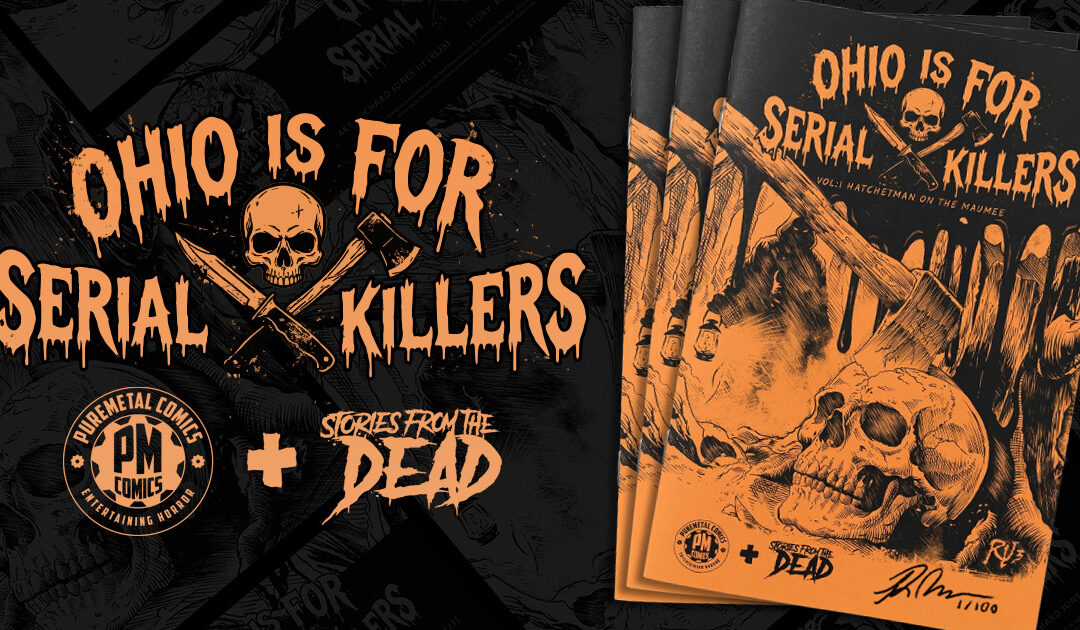
Horror thrives in places people think they already understand. Quiet towns. Empty roads. Familiar rivers that hide more than they reveal. Ohio Is for Serial Killers Vol. 1: Hatchetman on the Maumee takes that idea and twists it into something far more disturbing, marking the launch of a new horror series from Richard Jones III and published under Puremetal Comics.
This isn’t a safe introduction to horror—it’s an escalation.
At the center of this debut story is the Maumee River, a stretch of water that becomes less of a location and more of a witness to violence, folklore, and psychological decay. Hatchetman on the Maumee builds its terror from the ground up, using regional myth and grounded realism to create something that feels uncomfortably possible. The horror here doesn’t come from distant fantasy—it feels embedded in the soil, in the water, and in the history of the place itself.
Narration plays a major role in shaping the tone of the series. The story is partially told through Vlad, an eerie and unforgettable presence described as a bat eternally nailed to the wall. Vlad is not a traditional narrator—he is trapped, observing, and forced to endure the unfolding events along the river. His perspective adds a surreal, almost mythic layer to the brutality, giving the story a voice that feels both ancient and disturbed. Through Vlad, the horror becomes something watched as much as it is experienced.
Puremetal Comics brings this vision to life with a clear publishing identity: bold, uncompromising horror storytelling that doesn’t soften its edges. Ohio Is for Serial Killers fits squarely into that mission. It is grim, atmospheric, and intentionally unrelenting, leaning into themes of madness, folklore, and violence without hesitation. This is not horror designed to comfort—it is designed to linger.
The series makes its first official appearance in Stories from the Dead, but Hatchetman on the Maumee stands as its opening statement. Ohio itself becomes a central character, reshaped into a place where local legend and real-world brutality blur together. The result is a setting that feels familiar at first glance but quickly becomes alien the longer you stay in it.
For readers and collectors, the upcoming Ashcan release is where this world first becomes physically tangible.
Ohio Is for Serial Killers Ashcan Release
The official Ashcan comic for Ohio Is for Serial Killers Vol. 1: Hatchetman on the Maumee, published by Puremetal Comics, is now available for pre-order here:
https://rlj3.com/ohio-is-for-serial-killers-comic-book/
This special release is a limited 8-page Ashcan edition, offering an early preview of the upcoming 7-page story. It includes 4 preview pages, giving readers their first real glimpse into the world before the full release.
The Ashcan is scheduled for release on July 3rd, 2026, but all pre-orders will ship earlier on June 29th, 2026, ensuring collectors receive their copies ahead of launch.
Each Ashcan is hand signed and individually numbered, reinforcing its role as a collectible piece rather than a standard preview. Even more importantly, the print run is strictly limited to 100 copies total, making this a rare and finite entry point into the series. Once they are gone, they are gone permanently.
A New Kind of Ohio Horror
What makes Ohio Is for Serial Killers stand out is its refusal to treat Ohio as background scenery. Instead, it turns the landscape into mythology. The Maumee River is no longer just a place—it becomes a boundary between reality and something far older and more violent. The Hatchetman legend at the center of the story feels like it has always existed, waiting to be rediscovered rather than invented.
The horror is slow, deliberate, and deeply atmospheric. It doesn’t rely on constant shock value. Instead, it builds tension through implication, tone, and the uncomfortable sense that something is always just out of sight.
With Puremetal Comics backing the release, this series is positioned as part of a larger push toward darker, more experimental independent horror storytelling. It’s a statement piece—both in content and presentation.
The Ashcan is your first chance to step into that world. Small in size, limited in number, but heavy with intent.
The river is waiting. And it remembers everything.
by Richard Jones III | Apr 28, 2026 | Custom Illustration
In a world where content is everywhere and attention spans are shrinking, standing out visually has never been more important. Whether you’re a brand, a creative agency, or an independent artist, the imagery you use plays a massive role in how your audience perceives you. One of the most common decisions businesses face is whether to use stock images or invest in custom illustration. While stock images may seem convenient and cost-effective upfront, custom illustration consistently proves to be the more powerful, strategic choice.
Here’s why custom illustration beats stock images every time.
1. Unique Branding That Actually Stands Out
Stock images are, by design, mass-produced. The same image you use on your website could also appear on dozens—or even hundreds—of other sites. This creates a major problem: lack of originality.
Custom illustration, on the other hand, is created specifically for your brand. It reflects your tone, your message, and your identity. Whether your style is bold and edgy, clean and corporate, or dark and gritty, custom artwork ensures your visuals are unmistakably yours.
When people land on your website or see your marketing materials, you want them to remember you—not feel like they’ve seen it all before.
2. Stronger Emotional Connection
Illustration has a unique ability to tell stories in ways photography often cannot. With custom illustration, you’re not limited to reality—you can exaggerate, stylize, and create entire worlds that evoke emotion.
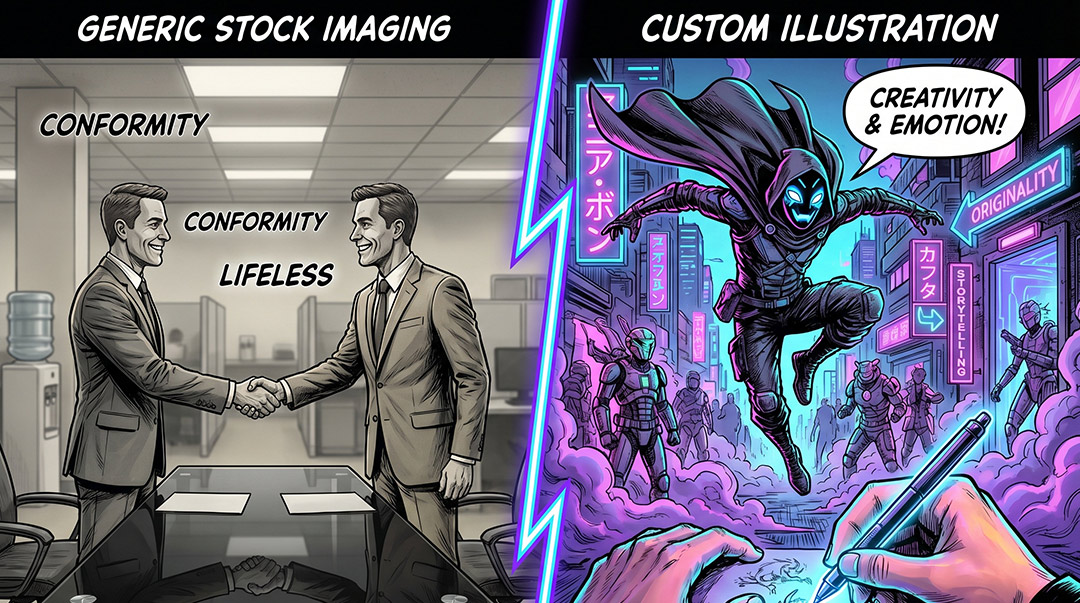
Stock images tend to feel staged or generic. You’ve seen them before: the overly smiling business team, the perfectly posed handshake, the cliché “creative workspace.” These visuals don’t connect because they don’t feel real or personal.
Custom illustrations, however, can be crafted to resonate with your specific audience. They can reflect humor, tension, nostalgia, or even horror—whatever aligns with your brand voice. This emotional connection is what turns casual viewers into loyal customers.
3. Complete Creative Control
When you use stock images, you’re limited to what already exists. You spend hours searching for something “close enough,” often settling for visuals that don’t fully match your vision.
Custom illustration flips that entirely.
You get exactly what you need—no compromises. Want a character that represents your brand? Done. Need a scene that doesn’t exist in real life? No problem. Looking for a specific color palette or composition? It’s all within your control.
This level of flexibility allows your visuals to align perfectly with your messaging, rather than forcing your messaging to fit the visuals.
4. Better Brand Consistency
Consistency is key in branding. From your website to your social media to your print materials, everything should feel cohesive.
Stock images make this difficult. Even if you find images with a similar style, subtle differences in lighting, tone, and composition can make your brand feel disjointed.
Custom illustration solves this by creating a unified visual language. Every piece of artwork can follow the same style, color scheme, and design rules, reinforcing your brand identity across every platform.
Over time, this consistency builds recognition—and recognition builds trust.
5. No Licensing Headaches
Stock images come with licensing restrictions. Depending on where and how you use them, you may need to pay additional fees or risk legal issues. Some licenses don’t allow for commercial use, while others limit how many times an image can be reproduced.
With custom illustration, you typically own the rights (depending on your agreement with the artist or agency). This gives you the freedom to use your visuals however you want—on your website, in ads, on merchandise, or anywhere else.
No worrying about someone else using the same image. No worrying about usage limits. Just complete peace of mind.
6. Increased Perceived Value
High-quality custom visuals signal professionalism. They show that you’ve invested in your brand and care about how you present yourself.
Stock images, especially common ones, can have the opposite effect. They can make your business feel generic or low-effort—even if your products or services are top-notch.
Custom illustration elevates your brand. It creates a premium feel that can justify higher pricing and attract higher-quality clients. People are naturally drawn to originality and craftsmanship, and custom visuals communicate both.
Custom illustrations aren’t limited to one format. A single piece of artwork can be adapted for multiple uses:
- Website banners
- Social media posts
- Print materials
- Packaging
- Merchandise
- Video animations
Because the artwork is created specifically for you, it can be designed with scalability in mind. Elements can be rearranged, resized, or repurposed without losing quality or consistency.
Stock images don’t offer that same flexibility. You’re often stuck with a fixed composition that doesn’t translate well across different formats.
8. Perfect for Storytelling and World-Building
For brands in creative industries—like comic books, entertainment, or lifestyle brands—storytelling is everything.
Custom illustration allows you to build entire worlds around your brand. You can create characters, environments, and narratives that evolve over time. This is especially powerful for content marketing, where ongoing storytelling can keep your audience engaged.
Stock images simply can’t compete in this area. They capture moments, but they don’t build universes.
9. Better SEO and Engagement
Visual content plays a significant role in SEO and user engagement. Unique visuals can increase time on site, reduce bounce rates, and encourage social sharing.
Custom illustrations are inherently more shareable because they’re original. People are more likely to engage with something they haven’t seen before.
Additionally, custom visuals can be optimized for your content strategy. You can create illustrations that align with specific blog topics, keywords, and user intent—something stock images can’t do effectively.
10. Long-Term Investment vs Short-Term Fix
Stock images are quick and easy, but they’re also temporary. As your brand grows, those generic visuals can hold you back, forcing you to rebrand or redesign later.
Custom illustration is an investment. It builds a strong visual foundation that can grow with your business. Over time, it pays for itself through stronger branding, better engagement, and higher perceived value.
Final Thoughts
Stock images might seem like the convenient choice, but convenience rarely leads to distinction. In today’s competitive landscape, blending in is the fastest way to be overlooked.
Custom illustration gives you the tools to stand out, connect with your audience, and build a brand that people actually remember. It offers originality, flexibility, and emotional impact—things stock images simply can’t replicate.
If you’re serious about your brand, your marketing, and your long-term growth, custom illustration isn’t just a better option—it’s the right one.
by Richard Jones III | Apr 9, 2026 | puremetal comics, teds dead
The undead don’t usually get origin stories this good.
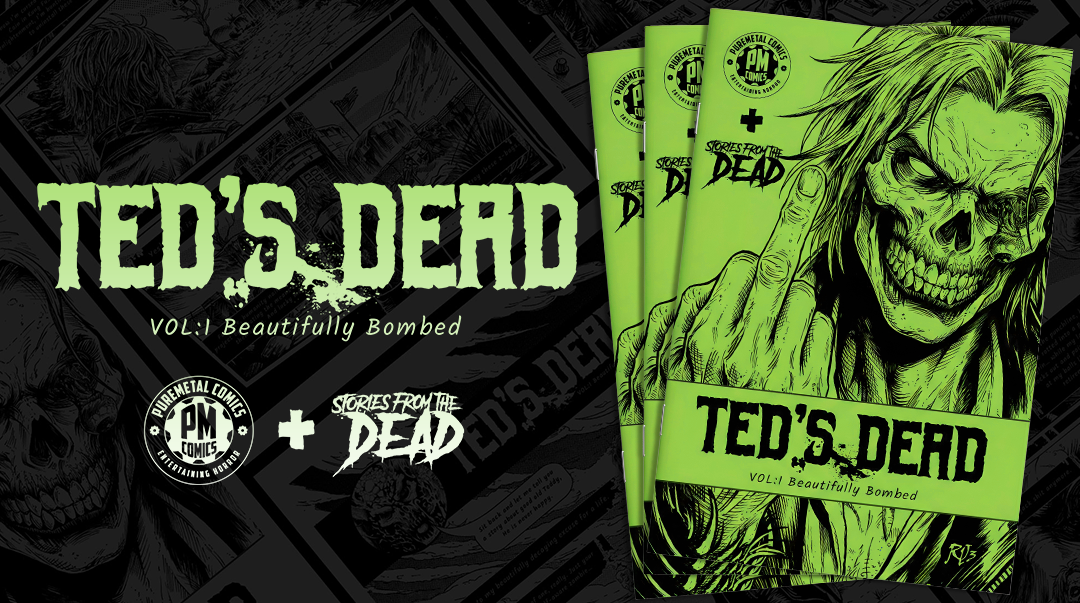
Enter Ted’s Dead—a dark, sarcastic dive into the miserable (and hilarious) existence of a zombie who just can’t seem to stay dead… no matter how hard he tries. If you’ve ever wondered what it would look like if a metalhead lost everything, gained undeath, and developed a serious attitude problem about it, you’re about to find out.
To kick things off, the Ted’s Dead 4-page Ashcan Comic has officially arrived.
Now, if you’re not deep into comic culture, an ashcan is essentially a raw, stripped-down preview—a first taste of a larger story. But don’t let the size fool you. This isn’t some throwaway teaser. This is your first glimpse into a grimy, blood-splattered world filled with dark humor, brutal honesty, and a main character who would rather be literally anywhere else… except existence.
Ted isn’t your typical zombie. He’s not shambling around looking for brains or mindlessly terrorizing the living. He’s aware. He’s bitter. He’s exhausted. And worst of all? He’s completely unable to die. While the rest of the undead stumble through eternity, Ted is stuck in a loop of failed escape attempts, constant irritation, and a deep hatred for what he’s become—and for the “z-bags” around him.
That’s where this ashcan comes in.
These four pages are a snapshot of that chaos—a quick, sharp punch of story that sets the tone for what’s to come. It’s gritty, it’s a little unhinged, and it doesn’t try to clean itself up for anyone. This is indie comics at its core: raw creativity, dark storytelling, and a voice that doesn’t ask for permission.
And here’s where things get even better for collectors and fans of physical media.
Every single copy of the Ted’s Dead Ashcan Comic is hand signed and individually numbered. That means no two copies are exactly the same. This isn’t mass-produced, forgettable content—it’s a limited piece of the project’s history. Only 100 copies printed. Once they are gone, they are gone. It’s something you can actually hold onto as this world grows, evolves, and (inevitably) gets even more chaotic.
In a time where everything is digital, temporary, and endlessly scrollable, there’s something special about owning a physical comic—especially one that feels this personal. You’re not just reading a story; you’re supporting an independent creator building something from the ground up, one page at a time.
And make no mistake, Ted’s Dead is just getting started.
This ashcan release is the first crack in the coffin lid. The larger story will continue in Stories from the Dead, set to release on October 31st, 2026—a fitting date for a series that leans hard into horror, dark comedy, and the beautifully grotesque.
So if you’re into zombies, sarcasm, metalhead energy, and stories that don’t pull their punches, this is your invitation.
Ted may be dead… but his story is very much alive.
PURCHASE TED’S DEAD ASHCAN COMIC HERE
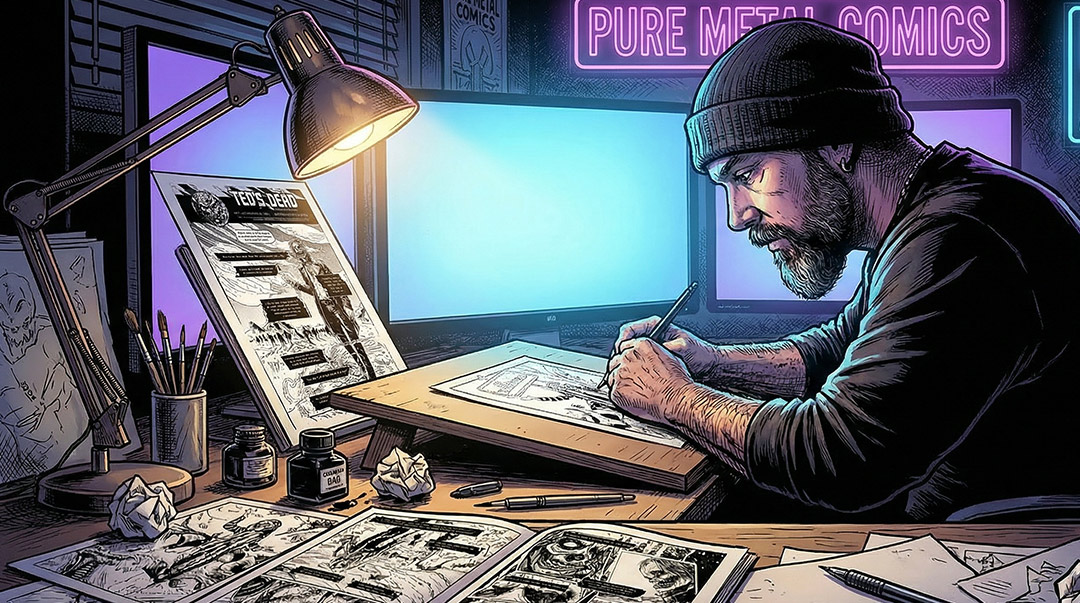
by Richard Jones III | Apr 2, 2026 | comic book industry
Breaking into the comic book industry can feel overwhelming, especially when you’re trying to figure out where—and how—to submit your artwork. Many aspiring artists assume it’s just about finding the right email address and hitting send. In reality, the process is far more strategic. Knowing who accepts submissions, what they’re looking for, and how to present your work professionally can make all the difference.
Whether you’re an illustrator, writer-artist, or full creative team, this guide will walk you through the best places to submit your comic book artwork and how to dramatically improve your chances of getting noticed.
Understanding the Comic Submission Landscape
Before you start sending out emails, it’s important to understand how the comic book industry works. Not all publishers accept unsolicited submissions. In fact, many of the biggest names in comics do not review cold emails at all.
Major publishers typically hire artists based on:
- Proven portfolios
- Industry connections
- Convention portfolio reviews
- Previous published work
That doesn’t mean breaking in is impossible—it just means your strategy needs to be smarter.
Why Big Publishers Don’t Accept Submissions
Companies like Marvel and DC receive thousands of submissions every year. To avoid legal complications and manage volume, they’ve moved away from accepting unsolicited work.
Instead, they rely on:
- Talent scouting at conventions
- Referrals from industry professionals
- Established artists with proven track records
For new creators, this means your best entry point is often through indie publishers or building your own audience first.
Major Publishers (Selective / Portfolio-Based)
Marvel Comics
- ❌ No unsolicited submissions accepted
- ✅ Best route: portfolio reviews at conventions or through editors on social media
- Occasionally hires through talent search programs
DC Comics
- ❌ Also does not accept unsolicited submissions
- ✅ Portfolio reviews at events and industry networking
Best Comic Book Publishers That Accept Submissions
The good news? There are many publishers actively looking for new talent. These companies are more accessible and often more open to fresh ideas and unique styles.
Mid-Size & Indie Publishers (Open to Submissions)
1. Image Comics
Image Comics is one of the most respected indie publishers in the industry. They operate on a creator-owned model, meaning you retain the rights to your work.
However, there’s a catch:
- You need a complete team (artist, writer, letterer, etc.)
- Your project must be fully developed
- Quality expectations are extremely high
This is a great option if you’re serious about building your own intellectual property.
2. Dark Horse Comics
Dark Horse has published everything from superhero titles to horror and licensed properties. While they don’t always have open submissions, they do periodically review portfolios.
Best approach:
- Monitor their submission guidelines regularly
- Prepare a polished, professional portfolio
3. BOOM! Studios
BOOM! Studios is known for its diverse range of comics, from original series to licensed titles.
They accept submissions via email when open and are particularly interested in:
- Strong storytelling
- Unique visual styles
- Marketable concepts
4. AfterShock Comics
AfterShock is a creator-driven publisher that values bold ideas and strong execution.
They accept submissions that include:
- A compelling pitch
- Sequential artwork
- A clear understanding of your story direction
If your work leans toward darker or more mature themes, this could be a great fit.
5. Scout Comics
Scout Comics is one of the most indie-friendly publishers out there. They actively look for new creators and are open to submissions.
They’re a great starting point if you’re trying to:
- Get your first published credit
- Build industry experience
- Develop your portfolio
6. AWA Studios
AWA (Artists, Writers & Artisans) is more selective but still worth keeping on your radar. They occasionally open submission windows and focus on high-quality storytelling.
7. Zenescope Entertainment
Zenescope specializes in fantasy, horror, and dark storytelling. If your artwork fits that tone, this is a strong opportunity.
They accept submissions via email and are known for visually striking, stylized art.
Smaller / Indie-Friendly (Great for Breaking In)
8. Source Point Press
Source Point Press is another indie publisher that’s very welcoming to new talent. They publish a wide range of genres and often work closely with creators.
This is one of the best places to:
- Break into the industry
- Build relationships
- Get your work printed
9. Alterna Comics
Alterna Comics offers a unique approach with affordable print formats and a focus on storytelling over flashy production.
They periodically accept submissions, so timing is key.
What to Include in Your Submission Email
Sending your work without structure is one of the fastest ways to get ignored. Publishers don’t have time to dig through messy or incomplete submissions.
Here’s what you should include:
1. A Short, Professional Introduction
Keep it simple:
- Who you are
- What you do
- Why you’re reaching out
2. Sequential Art Pages (Very Important)
This is where many artists go wrong.
Publishers want to see:
- Storytelling ability
- Panel flow
- Character consistency
Send 5–10 pages of sequential art—not just standalone illustrations.
3. Character Designs
Include a few strong character sheets to show your design skills and range.
4. A Brief Pitch
Summarize your story in 1–2 paragraphs:
- Genre
- Main character
- Core conflict
- Unique hook
5. Portfolio Link
Always include a clean, easy-to-navigate portfolio. Avoid sending large attachments unless requested.
Common Mistakes That Hurt Your Chances
Even talented artists get rejected because of avoidable mistakes. Here are the most common ones:
Sending Only Pinups
Pinups look great, but they don’t show storytelling ability. Comics are about narrative flow.
Overloading the Email
Keep your message concise. Editors don’t have time to read long, unfocused emails.
Ignoring Submission Guidelines
Every publisher has different requirements. Not following them shows a lack of professionalism.
Mass Emailing Publishers
Sending the same generic email to multiple companies is easy to spot—and often ignored.
How to Stand Out From Other Artists
Talent matters, but presentation and strategy matter just as much.
Develop a Unique Style
Don’t chase trends. Publishers are looking for artists who bring something original to the table.
Focus on Storytelling
Clean panel transitions, strong pacing, and emotional clarity will set you apart more than flashy art.
Build an Online Presence
Having a website or social media following shows that:
- You’re serious about your craft
- You can help promote your work
Network in the Industry
Attend conventions, join online communities, and connect with other creators. Relationships often open doors faster than cold emails.
Should You Self-Publish First?
In today’s comic industry, self-publishing is more powerful than ever.
Platforms like:
- Kickstarter
- Webtoon
- Personal websites
Allow you to:
- Build an audience
- Prove demand for your work
- Gain experience
Many successful creators were discovered because they already had momentum behind their projects.
The Reality of Breaking In
Getting published isn’t just about skill—it’s about persistence.
You will likely face:
- Rejections
- No responses
- Requests for revisions
That’s normal.
The artists who succeed are the ones who:
- Keep improving
- Keep submitting
- Keep creating
Final Thoughts
Submitting your comic book artwork to publishers is a process that requires patience, strategy, and professionalism. While it might be tempting to aim straight for the biggest names in the industry, your best chances often lie with indie publishers who are actively looking for new voices.
Focus on building a strong portfolio, mastering sequential storytelling, and targeting the right publishers for your style. Over time, those efforts can lead to real opportunities—and potentially a long-term career in comics.
Remember, every professional comic artist started exactly where you are now: with a portfolio, a dream, and the courage to hit “send.”



Recent Comments